Corporate Ethics, Governance & Sourcing Integrity
Desouza Farms LLP is built on a foundation of absolute supply chain transparency and uncompromising corporate responsibility. Operating as a modern, structured food manufacturer and a registered global exporter, we actively cross-examine every layer of our procurement networks. From the soil of our contracted smallholder farms to the advanced industrial processing lines at our Khanapur facility, execution precision and ethical governance remain non-negotiable.
1. End-to-End Field Traceability Models
We enforce rigorous tracking mechanisms across our entire agricultural pipeline. Every single input material—including estate-harvested multiflora honey, premium fresh mangoes, processing vegetables, and specialized raw packaging materials—is registered with precise batch origins. We do not source from unverified open-market aggregators; we partner exclusively with certified growers and verified corporate suppliers who fulfill our high operational metrics.
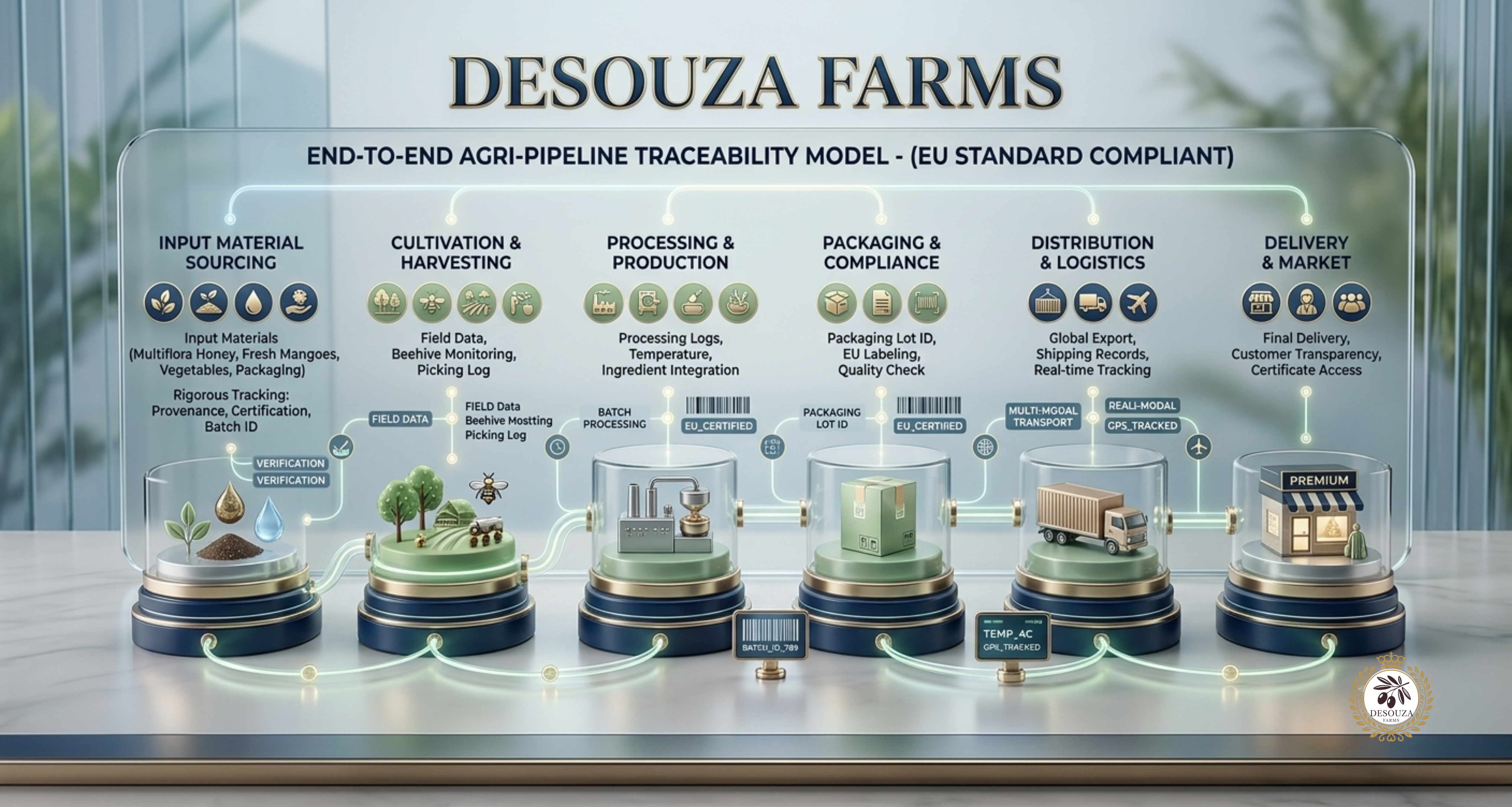
Traceability Audit Mechanism: Our R&D and Quality assurance teams log raw ingredient data, tracking maximum residue limits (MRLs) for pesticides, heavy metals, and micro-biological variances. This guarantees our bulk shipments voluntarily meet the stringent food hygiene and public health expectations of all international import markets.
German Supply Chain Due Diligence Act (LkSG) Compliance
To firmly establish Desouza Farms LLP within Western European trade networks, we voluntarily audit our primary tier of agricultural partners against the core criteria of the German Supply Chain Due Diligence Act (Lieferkettensorgfaltspflichtengesetz - LkSG). This structural framework ensures our business operations remain directly protected against human rights risks and environmental non-compliance globally.
Core LkSG Audit Pillars Enforced:
- Zero Child & Forced Labor: Absolute prohibition of underage work or exploitative employment models at any farm tier.
- Fair Workplace Compensation: Enforcement of statutory minimum living wages and clear operational working-hour limits.
- Occupational Health & Safety: Provision of certified protective equipment for field labor and safe processing plant clean-rooms.
- Environmental Degradation Safeguards: Prevention of unauthorized water contamination, toxic waste leaks, or illegal deforestation.
2. Industrial Governance and Processing Standards
Inside our advanced automated manufacturing facilities, ethical operations run hand-in-hand with safety sciences. Every processing line, from batch retort sterilization to high-speed canning equipment, operates under validation audits that protect both product integrity and factory operator safety.
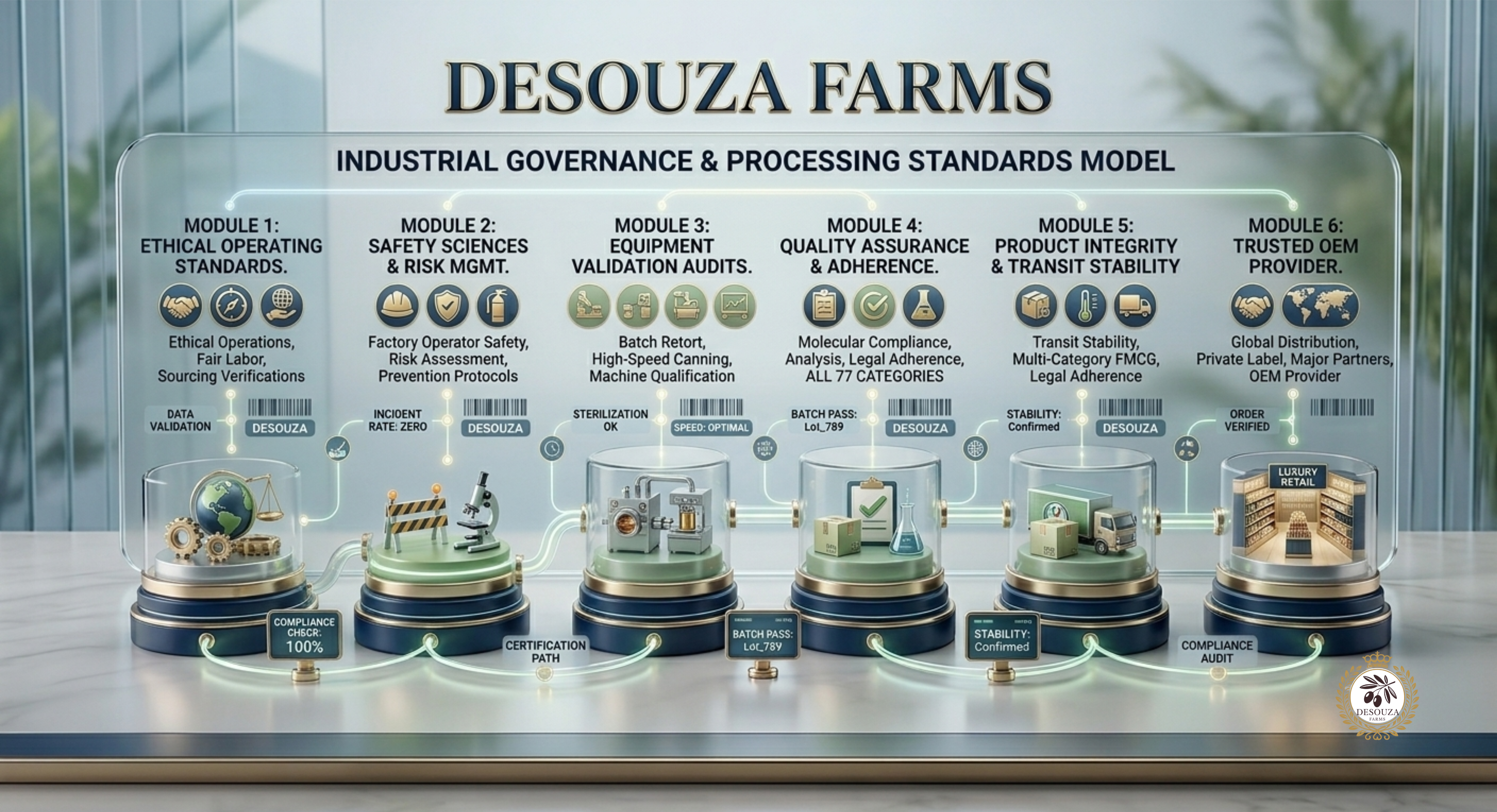
Through direct cooperation with international regulatory standards, we verify that our factory systems maintain absolute legal adherence across all 77 FMCG retail product categories. By combining long-term transit stability with clear ethical sourcing pathways, Desouza Farms stands as a premier, trustworthy private label OEM provider for major global food distributors.
3. Anti-Bribery, Anti-Corruption & Transparent Commercial Dealings
Desouza Farms LLP enforces a zero-tolerance policy regarding bribery, extortion, kickbacks, or any illicit financial incentives across our global operations. Our commercial contracts, import-export clearances, and regional distribution frameworks operate with total transparency. We build long-term relationships with international trade partners strictly based on product excellence, cost competitiveness, and absolute transaction compliance.
Our internal financial controls and corporate audit registers undergo meticulous external evaluation. Every single trade entry, clearance log, and cross-border invoicing file is recorded under strict international accounting provisions to shield our distributors from compliance variances.
4. Environmental Stewardship and Ecological Protection
We integrate rigorous eco-efficiency measures directly into our manufacturing infrastructure. Our processing operations prioritize optimal water management via advanced recycling loops and minimize overall power footprints through smart machinery calibration. We actively limit industrial food waste by applying modern extraction and optimization protocols during bulk processing.
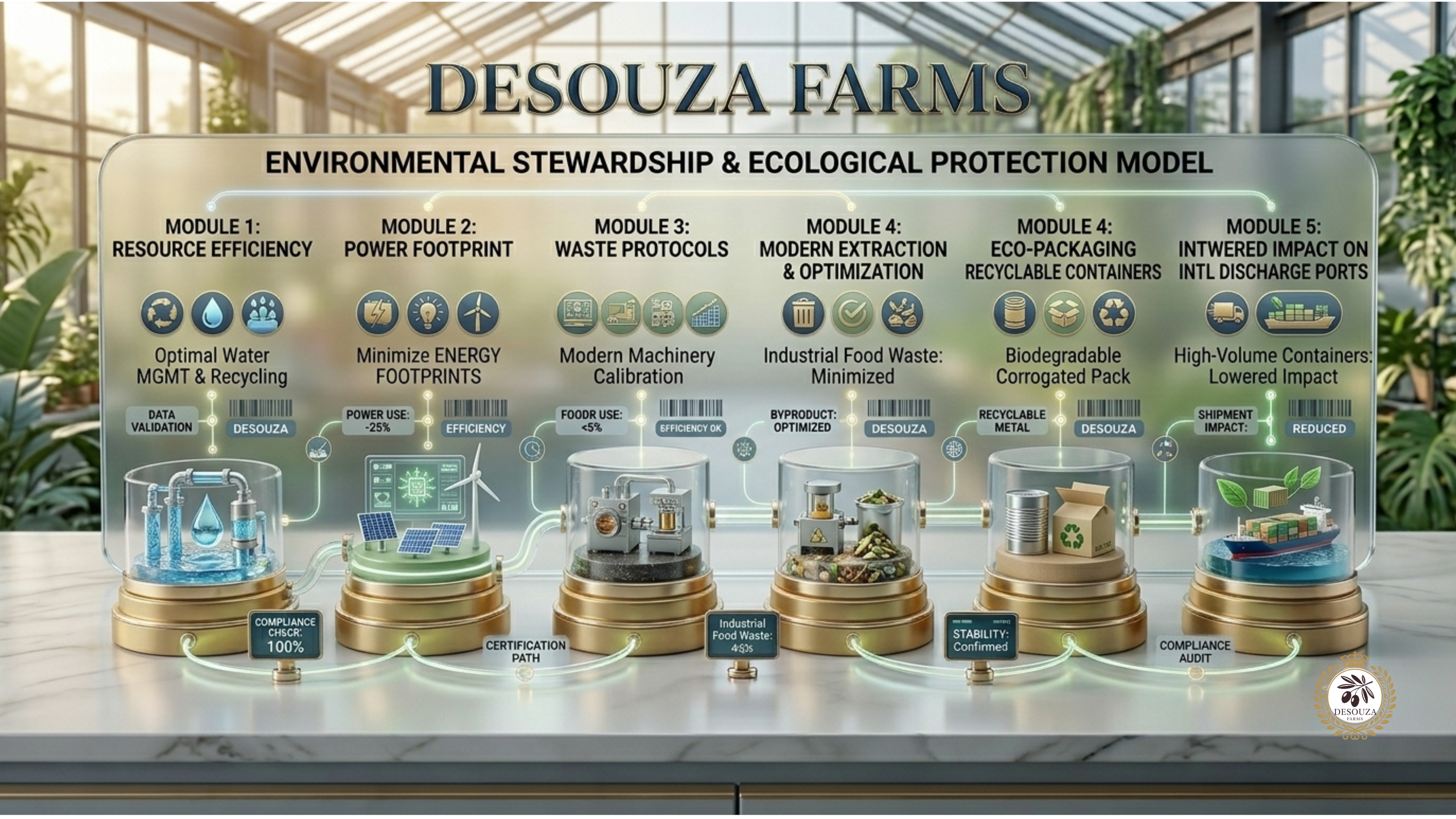
Additionally, our procurement strategies favor fully recyclable metal food containers and biodegradable corrugated transport packaging. This commitment helps lower the broader environmental impact of high-volume container shipments heading to international discharge ports.
5. Smallholder Upliftment and Local Community Development
Our corporate mission remains structurally linked to localized rural development. By sourcing directly from farmers across regions like the Western Ghats and adjacent agricultural belts, we foster economic stability within local cultivation communities. We eliminate unstable intermediary traders, ensuring that our agricultural partners receive reliable, transparent compensation directly for their crops.
Through our regional training initiatives, we offer smallholders actionable insights into eco-friendly crop cultivation, modern soil care, and rigorous harvest management. This localized approach strengthens raw ingredient security while empowering farming families to construct durable, multi-generational livelihood frameworks.